#AtoZchallenge S – Spirit Song #flashfiction

For S in the AtoZChallenge I’m so happy to be sharing this flash fiction story that came third in the flash500 comp in 2013.

Judge Steph Patterson – Senior editor of Crooked Cat Publishing stated,

‘Unusual, emotional, warm, surprising — a warm, unusual story. It moved me when I read it. It has an air of esoteric.’

Have a read and let me know your thoughts…

Spirit Song

Cecilia no longer saw the faces of the dying. They were merely shells cast off at the last to free the soul within. But, in the moments before death, she often wondered what happened to their spirits.
Sensing the man’s time was drawing near, she picked up her lute. Her fingers plucked the strings, dancing like raindrops over the notes, filling the room with fluid harmony. Slowly, the man in the bed responded. The music rose to a crescendo as he took his final breath, and she wept as his spirit lifted clear of its bonds to embrace the light. Cecilia let her fingers fall from the strings, while the haunting resonance of the song echoed around her. She cradled the lute in her frail hands and allowed the stale sickly air in the room to dry her tears. The intrusion of another broke the spell, and she opened her eyes to blackness.
‘He’s gone, Cecilia. But he died with a smile on his face,’ the nurse told her softly. ‘Come on, let’s get you back to your room.’
Cecilia shook her head. ‘There’s another down the hall…’ She rose on unsteady legs, clutching the lute possessively against her body.
‘At least let me help.’ The nurse took hold of her arm, but Cecilia recoiled from the touch and the strength of life flowing through the younger woman.
‘I can do it myself.’ She felt her way to the door and shuffled along the corridor with her hand trailing along the wall. Finally she reached the right room and slipped inside. She plucked the familiar notes of the spirit song until the dying woman floated away into the healing light.
Cecilia slumped to the floor, hugging the lute to her chest. Exhaustion tugged her towards sleep and she dreamt of the place beyond death.
She awoke in bed and sensed the nurse at her side. A warm hand squeezed her cold bony flesh.
‘My lute…’ she croaked and felt feebly for her beloved instrument.
‘Have a drink first.’
A straw prodded her lips and she sucked at the water, choking as its coldness flooded her constricted throat. The covers shifted under the weight of the lute and her hand scrabbled to lay across its neck. She stroked the strings with her fingertips, too weak to pluck a note.
Cecilia drifted back to sleep. The music swelled inside her, its poignant melody leading her spirit away from its dying shell. She travelled through a tunnel feeling weightless and pain-free, and cocooned by warmth. Bright light blinded her and cold air caressed her naked body. The shrill cry of a new-born filled her ears. Cecilia forced open her eyes and stared up into a stranger’s face.
Before the memories of her old life faded away, she finally had her answer.

spirit song light

The story behind the story;

Spirit Song holds a very special place in my heart. I wrote it when my Grandad was admitted into a hospice. At the time I was attending creative writing classes and the prompt for that week was Cecilia, the patroness of musicians.

I sat in bed with my notebook and closed my eyes to think. When I started to write this piece seemed to flow onto the page almost fully formed and I instantly fell in love with the character.

I entered it into the Flash500 comp. The critique stated it was a lovely character study, but not a story.

I couldn’t let Spirit Song go, or maybe it wouldn’t let go of me. I rewrote the end and gave it a starting point that tied in with the conclusion. Then I re-entered and this second attempt was placed 3rd in the Flash500 comp. I felt like that was a turning point for me, a time when I could really start to believe in myself as a writer. Two years later, I self published my first novel.

Did you have a defining moment when you realised you were a writer?

(If you want to find out more about the Flash 500 Quarterly competition, click here. It’s well worth paying for the critique, my story would never have been placed without that important feedback.)
P1150497 (2)

***

Tomorrow T for Titles.

Check out some other AtoZ posts here

#AtoZChallenge P – Proofreading Top 10 checklist

Proofreading is one of the hardest stages of writing for me. I love drafting and editing, but to read each word and sentence and analyse it’s components is difficult. It’s too scientific for my creative brain, but an important process that needs to be done before considering publication.

Back in August last year, I devised a checklist to tackle the final proofread of Visions of Zarua. My original post was here.

Looking back, I’m quite pleased with it as a ‘how to’ guide. It worked brilliantly for me, but I do have to warn you that a couple of tiny errors still slipped past this stage (slap wrist). Luckily with KDP & Createspace it’s a simple matter of updating the corrected file and within 24 hours the revised book is on sale. However, we should all aim to produce the best book we possibly can from the start and there really is no excuse for letting those errors slip past. My biggest advice is don’t skim at this stage. Focus and stay alert to stop those pesky mistakes from ruining a readers experience.

Proof reading Top 10 Checklist

  1. Use a hard copy – it’s too easy to skip over errors on the computer.
  2. Read aloud – but make sure the neighbours can’t hear you.
  3. Read it slowly, word by word – at reading pace your brain skips over words it expects to see and doesn’t pick up the errors.
  4. Use a ruler or blank page to highlight the line you’re reading – this ensures you don’t get ahead of yourself.
  5. Keep focused and hydrated by drinking lots of water – this helps keep you awake, and the trips to the toilet provide plenty of short breaks.
  6. Use a colourful pen to highlight the error, mark the sentence in the margin and fold the corner of the page over – triple insurance against the error being missed when updating on the computer.
  7. Avoid all distractions – escape from the phone and the internet.
  8. Keep a notebook handy – it’s great to make notes of any last minute niggles you need to sort out.
  9. The main edit should already have been done at this point so focus on errors with grammar, spelling, punctuation, word choice and spacing.
  10. And finally, there’s no harm in resetting the computer spell checker and giving it one last go.


WP_20160101_20_45_20_Pro

Used with my Editing Search & Destroy Checklist posted during the E challenge, you should catch most of the errors.

Have you got any proofreading tips to share?

Good luck!

 ***

Quality close ups I want to share.

Check out previous a-z posts here

#AtoZChallenge N – Notebooks I’ll never use

I have always loved notebooks and stationery. Always!

I collect notebooks and have a shelf full of unused ones. I think I must be the easiest person to buy for. A notebook and pen and I’m happy.

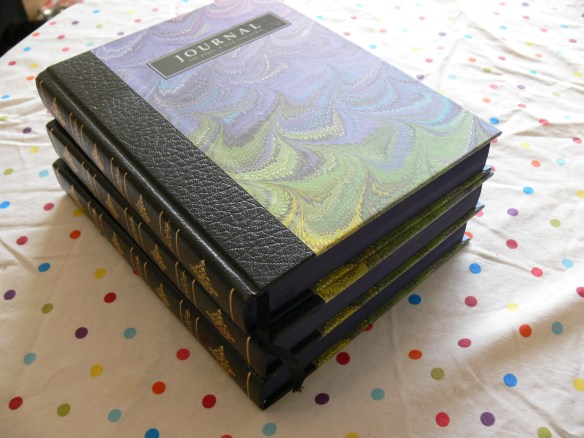
But these three beauties I’ve had on my shelf for at least fourteen years. I can’t bring myself to write in them. Nothing will ever be good enough to mar their beautiful pages. They were not particularly expensive, although at the time it would have been a luxury purchase.

I have to be careful, my daughter has her eye on this shelf. And I’ve seen her eyeing up these books before.

P1160465

It’s funny, when she saw them on the table she said, ‘So you’re finally going to write in them then!’

No, not today.

Do you love stationery, and do you have anything you just can’t bear to use?

***

Links to other a-z challenge blogs can be found here.


#AtoZChallenge K – Kai’s questions on an author’s resilience

This post was sparked by a recent year 6 school homework project. The subject was on resilience and my son asked to interview me about the resilience of an author. He also designed a poster of our kitten learning to write, intended to show other students that no matter how hard the task, you just have to keep going.

2015-09-22 10.56.57

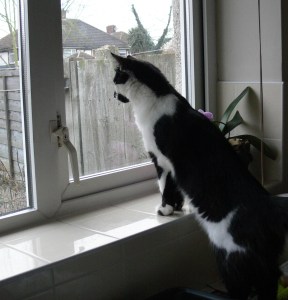
(I’m afraid to say that Poppy wasn’t as resilient as the rest of us authors, she’s given up a career as a writer and moved to full time bird watching.)

2016-02-10 10.30.54 (2)

Here are the questions my son asked me and my answers. I may elaborate a little on this post as Kai really didn’t want to write down an answer more than one sentence long.

Kai’s Questions on Resilience

1. What have you overcome when writing your books?

Over the years I’ve had to make myself learn a lot of new skills; editing, formatting for self publishing, I’ve had to tackle social media platforms and learn how to market my book on my own. I’ve also had to get over my shyness and force myself to attend evening writing classes and book groups.

The biggest thing I’ve had to overcome is self doubt, otherwise Visions of Zarua would never have been published.

2. Have you ever felt like giving up?

When my work is rejected, or someone doesn’t like it I’ve thought of giving up. But I love writing, and even though it’s hard work and there are rejections to deal with, I could never stop.

3. What kept you going?

My love of writing has kept me going through all the set backs. And the support of my family and friends.

4. What inspired you to become a writer?

I’ve always loved reading and creating my own stories. I first discovered that I loved writing in junior school. My favourite class was English Language /  Literacy. I loved the homework! I’d rush home and sit in front of the telly and writes pages. I especially loved it when we were given TITLE PROMPTS for homework. The hardest thing for me was choosing which title, I wanted to use them all.

5. What disappointments have you been through?

My books have been rejected by agents and publishers. I’ve entered competitions and failed to be placed. Each time I have revised and reworked my novels and stories and resubmitted. You can’t give up if you want to succeed.


Extra Note:-

Another reason I decided to self publish was to show my children that you can achieve anything if you try hard enough. I could have kept submitting to agents and publishers hoping for a break, but instead I put in the hard work myself and took control of my own destiny.

Now I have a finished book and I can say ‘I am an author!’ My children can say ‘My mum writes books,’ instead of saying she stays at home and looks after the cats – my son really did say that at school once.

I’ve actually just registered as a self employed author with the tax office. Now I really have to believe it and start writing it on forms instead of falling back on being a housewife.


It was fun being interviewed by my son, and really nice that he thought of me for this homework.

***

Tomorrow – L for leaves and lovely lilies.

More a to z posts can be found here.


#AtoZChallenge I – Inspiration

I was lost for Inspiration with ‘I’ and that’s when it dawned on me… Inspiration.

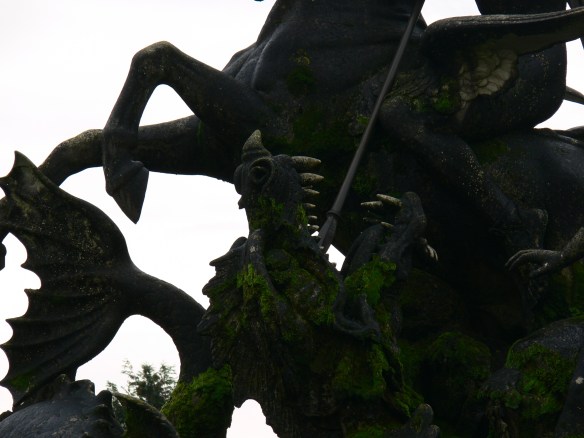
I find getting outside with nature, whether that’s just walking or taking photographs, charges up my creativity. I like beautiful places, but forests have a special place in my heart. These two prints hang in my home, and I love to stare into them and wonder what is waiting beyond the trees.

P1160475P1160476

Pictures and visual aids really get the ideas flowing. A great place to find these pictures is in magazines. Especially as you can cut the pictures out and keep them with you whenever you need a creativity boost.

I subscribe to some really good magazines that have fascinating articles as well as stunning pictures. Lots of my characters, places and ideas have come from these pages.

My top three for inspirations are;

Country file (also love the TV show on a Sunday)

Lonely Planet

Discover Britain.

WP_20160124_14_36_51_Pro

I wrote a post about this a few months ago. Original post.

In the post I revealed how I covered my writing area with pictures to inspire my WIP. That would be fine, but my desk is in a corner of the kitchen so everyone has to put up with my mess. I think it looks great though. I can sit back and stare at these pictures and escape into the world I am creating.

my writing space

I told you it was a mess!

Do you have any magazines that inspire you?

***

Tomorrow a delicious Jam.

Check here for links to my other a-z challenge posts.


#AtoZChallenge – E for Editing ‘Search and destroy’

If you want your story to fly off the page – then it’s all in the editing.

Once you have a near finished draft, it’s important to go through it and cut any unnecessary words. I use Mircosoft Word ‘Navigation’ – CTL ‘F’ key. It’s brilliant. You type in a word and it will tell you how many times you’ve used it, shows you page numbers and allows you to navigate easily between these sentences to fix them.

I have a list I work through. It started when my Beta readers commented that I used certain words and phrases too often – everyone grinned (mostly inappropriately!), there were lots of smiles flashing and a few too many calming breaths! There are plenty more, but I don’t want to embarrass myself too much.

We all have our own pet words to search for and destroy, but here’s a list of a few that are universal.

ly words – Usually these words are added to weak verbs. It’s better to change the verb in question and delete the ly word. (walked quickly – ran)

ing words – Sometimes we use too many ing words and the prose would be improved by a rewrite.

ALL Variations of said: whisper/shout/mutter/ etc – As my editor pointed out, it should be obvious by the dialogue itself how it is said. If not, rework it. Also if its obvious who is talking you can get rid of the speech tag altogether.

Look / gaze / sat / walk and other weak verbs – replace with stronger ones.

Smile / grin / nod / shrug / cry  / sigh – Any over used actions that slip in during the creating stage.

Yes, No, well (in dialogue) – These are often pointless sentence starters.

Just, very, quite, more, really  etc – Filler words don’t add to the prose. The sentence becomes stronger without them.

Sense / feel / felt – These sentences can often be improved by rewriting. If a character felt something, it should be obvious by their actions without the writer spelling it out.

Contractions – Check they are used where appropriate in prose and dialogue.

Then, next – A creative writing teacher told me these are unnecessary (unless in dialogue)as everything in fiction is consecutive.

There was /were – Passive sentences slow the pace.

(I’m sure there are lots more to add to this list, please share yours)

Conclusion – Using Word’s Navigation (search and destroy method)

Lowers your word count.

Ensures your writing is succinct.

Roots out repetition and your pet words and phrases.

Helps you view the sentence in question separate from the whole, so you can pick out the problems and be ruthless fixing them.

You can see what words you use too often and become more conscious of them as you write your next draft.


Now your novel will fly off the page…

editing-656500_1280

(This brilliant pic is off Pixabay.com. It’s the first time I’ve used someone else’s image, but the site said it was free to use.)

***

Tomorrow I’m up for a bit of Foraging.

Links to my previous A to Z challenge posts

#atozchallenge – B Beta readers

Beta readers are a writers best friend. They helped me turn this:

WP_20151228_15_23_28_Pro

into this

VOZ print book 3d image flat

I’d never have found the courage to publish without their help and support. They were instrumental in helping the novel develop, pointing out character flaws, plot issues and words and phrases that I have a tendency to overuse.

How to find Beta Readers

I was lucky enough to make friends with writers from the adult education classes I attended a few years ago. Some of us have kept in touch and meet up to critique each others work.

These creative writing classes are a great way to learn the craft and make new friends, and I really recommend new writers try to join one.

There are other options; online courses, peer websites, or you can find beta readers advertising online and on sites like Goodreads. But there is nothing quite like sitting down over a cup of tea, or glass of wine and talking through your book with someone who understands the trials involved in writing.

Be a Beta Reader

You can learn a lot about the process of writing and editing by being a Beta reader yourself. I found it an enriching experience, both to the reader and the writer in me. It’s an honour to read someone’s work, to know that they trust you with their baby and that you’re probably one of the first to read their work as a whole.

Now for a few words from a couple of my lovely beta readers;

Beta-reading by Louise Spiers

‘I had not known I was a beta-reader until I saw the acknowledgements in Visions of Zarua by my friend Suzanne Rogerson. My ignorance of the term did not hinder my becoming one. Beta-reading comes naturally to those of us who as teachers have spent many hours reading and marking essays. I met Suzanne at a creative writing evening class and was impressed by her work and professionalism. After the class finished, a small group of us continued to meet. It was then that I read more of her book. The opportunity to read through the entire fantasy novel was one that I approached with enthusiasm. I enjoyed the process and it was a pleasure to help her. I can thoroughly recommend beta-reading to any writer. It is a privilege to be asked to read and comment on a writer’s work especially when you understand how many hours of hard work it represents. If I am ever in the position of needing a beta-reader, Suzanne will be my first choice. Finally, do go and check out Visions of Zarua. You won’t be disappointed.’

 ***

‘Beta readers are vitally important to improving your writing – they catch plot holes and inconstancies that you totally missed, along with providing encouragement when they tell you what worked well!   I’ve also enjoyed being a Beta reader for friends and other writers; it’s a great feeling to know you’ve helped someone else on their path to publication!’   Barbed Words
Barbed Words is also taking part in the A-ZChallenge so check out her blog here.

***

Has anyone else any Beta reading experiences to share?

The next few blogs will have a more crafty theme. And then I’ll be onto E – its all in the editing. See you next time.

#AtoZChallenge A – Amber’s Method: Top 5 #writingtips

Amber’s Method on how to create characters and stories.

(Background – Amber is my 9 year old daughter, but she’s already teaching me a thing or two about writing.)

1. Start with a name.

She uses name books to look up interesting male and female names.

I prefer to make names up, another reason I love the fantasy genre, but I often find the names are not unique and are used in unexpected places. My current W.I.P ‘Garrick’ is actually a London theatre and a nearby road I’d never heard of before. ‘Brogan’ has been an ogre in Sherk. ‘Rike’ has been used in Mark Lawrence’s Broken Empire trilogy.

2. Use pictures off the internet to create an Inspiration File

If she wants a particular type of character like a fairy or mermaid, or maybe a dark haired 10 year old, she’ll put in the search and look through the pictures. She then copies the pictures into a file that she can use to describe the character and refer to when she needs to. This also works for settings and objects.

My method has always been looking for faces and places in magazines and plastering them around my wall. Unfortunately my workspace is in the kitchen so everyone has to put up with my mess. Using a computer file would be a lot tidier and I would have it will me all the time.

(Pinterest – I used this to give me inspiration for the cover of Visions of Zarua. It’s a great resource, and one I want to put to better use for future books.)

3. Write the story – don’t edit until then end!

I’ve often said to her are you going to change that word (I hate seeing a word underlined in red) but she says ‘No, I’ll edit it at the end.’

4. Don’t show it to others too soon.

I have not been allowed to read her work yet.

Sometimes it makes sense to show restraint and get the work ready for others to see. Also talking about the WIP too soon can kill the spark of inspiration.

5. If you’re stuck use picture prompts, or read other books for ideas.

My daughter has shown me a picture prompt site called Pobble365.com that has a picture for each day of the year to use for inspiration. It also give you a starting sentence or words, and asks questions that can spark story ideas. It’s used in school, so is aimed more at children, but it’s still a fun way to spark story ideas.

I’m looking forward to applying these tips to my writing in the future.

***

Tomorrow I’ll be discussing Beta Readers, and then onto some more crafty posts. Right now its off to Hampton Court to spent the day steeped in history and beautiful buildings. I hope to have some interesting pictures to share for ‘H’.

(The pic is of a beautiful fountain at Witley Court, Worcestershire. It’s my picture prompt for the day!)

P1140635

P1140629

Please leave comments and I’ll get back to you this evening. I’m looking forward to checking out some new blogs on this challenge.

#amediting for the next two weeks!

Last week I finally completed the read through and edit of ‘Search for the Sentinel’. It’s in good shape, though far from ready to self publish. I need to add in a dozen or so scenes and have lots of tell and unnecessary exposition to delete. I also need to work on some of the world-building ideas to make sure they come alive for the reader.

I’ve challenged myself to complete this next stage of editing in two weeks, deadline when the kids breakup for half term. If you could see the scribbled mess of my draft you would know that it’s quite an undertaking. But if I don’t set the challenge I will just drift along without completing anything. Looks like I will have to unplug my Wifi.

The plan will then be to print it and read it again after a break of a week or so. Then I’ll keep repeating the process until I’m happy enough to pass it on for it’s first beta read.

I also need to look into book covers. This time it will need to have a theme that can run through 3 books – and I have no ideas where to start with that. But I shall be heading over to ‘The Cover Collection’ who made the brilliant cover for Visions of Zarua.

In the near future I hope to put together an editing checklist which will incorporate what I’ve learnt from creative writing classes, professional critiques and professional editing. Watch this space.

My editors are getting ready to give me a hand…

See you on the other side of two weeks, if I still have my sanity!


#Writers – looking for inspiration?

When I get stuck for story ideas or am in need of some inspiration I love to look through my magazine collection. I’ve found new counties and countries that might feature in my stories, possible characters, interesting facts, buildings and objects, articles on crafts and quirky details that might spark story ideas.

Some of my favourite magazines are:

WP_20160124_14_36_51_Pro

Countryfile – This magazine is always filled with inspiring stories, beautiful walks and landscape photography, crafts and seasonal articles. Plus they usually run a few pages on a chosen location with lots of interesting facts and pictures. It’s been a source of many of the photos on my wall for my W.I.P – Search for the Sentinel.


Discover Britain – this magazine is brilliant for pictures and articles about Britain. They have a focus on history and places to visit in Britain, and each issue will star a particular county i.e. Norfolk for the magazine in my picture. They have headers like History, Architecture, Art, Gardens and a Travel guide. Plenty to inspire…

Lonely Planet – The spectacular photographs are the stars of these magazines. I also find lots of interesting articles on places all over the world. They have monthly features like Globetrotter, Easy Trips, Great Escapes and Mini Guides.

My collection of writing magazines – These always have interesting articles to learn from and inspire, and I always head straight to the competition pages to see what’s coming up that I may be able to enter. I like the themed competitions for inspiration, and those that offer critiques for a small fee – possibly the most valuable thing to come out of entering competitions (if you don’t win that is!).

WP_20160124_14_34_11_Pro

I’m always on the look out for interesting and quirky magazines. Do you have any to recommend?