Guest Post – Dan Alatorre – 6 Steps to Creating Memorable Characters #Tuesdaybookblog

After my exhausting two week blog tour, I’m happy to take a break and hand over to another blogger Dan Alatorre. Today he shares with us a guest post all about creating memorable characters using his newly released book ‘The Navigators’ as a guideline.

Enjoy.

***

6 Steps To Creating Memorable Characters – a guest post by Dan Alatorre

As young readers, we probably loved a character that we saw in a book and ended up carrying that character with us the rest of our lives. As adults, we still love big screen movie icons and characters from books, wishing we were that courageous or that suave or that funny.

As authors, we want our readers to feel that way about the characters we create.

Findlay, the bad guy in The Navigators, my fast-paced sci-fi thriller about a group of paleontology students who make an amazing discovery, was accidentally created – by the good guys!

Melissa, the hero in this new release, starts out as almost a secondary player. “Missy” eventually she takes over and saves the day.

Peeky is Ishmael watching Captain Ahab go crazy after the whale, merely a witness to events, until we learn what he’s hiding. Then we realize nothing is what it seems in this story, why he’s the narrator, and that we are in for a fun ride.

So that’s WHAT they are; HOW do we make them memorable?


  1. Whether real or larger than life, the reader has to connect with the character.

When you read The Navigators, you have a feeling about most of these characters before the end of chapter one. I make them a person the reader identifies with – and not always in a good way.

As kids, we’ve all known a bully. We’ve all had a crush on somebody we couldn’t talk to. We’ve all had an embarrassing secret get out – maybe at a really bad time. We don’t forget that stuff, and if we’re reminded of it in a story, we are right back in the eighth grade cafeteria, dropping our lunch tray in front of the whole school. We’re with the character right up to our eyeballs.

That’s gold for an author.

I showed Peeky as likable, then much later I revealed his secret and showed him to be less than likable, and by the end of the story he had regained the readers’ sympathy.

But we first made him likable. I did that by having other characters show they like him.

But… we had to like them first.

Missy has achieved status in the group of friends by being smart and hard-working. Missy is also the moral compass of the male-dominated clan. She isn’t afraid to set everybody straight. These are all admirable qualities, so we like her. When she jokes around with Peeky, we like him because she does.


  1. Make the character a whole person with three dimensions.

The reader transfers that initial fondness – and gives the benefit of the doubt – to Peeky. Later, he will have to demonstrate his worth, which he does by trying to save his drowning friend’s life – but only after he accidentally sees Missy go for a near-naked swim. He feels bad about seeing her, but he’s human. So now we see he’s flawed, and we appreciate his shame. We feel that shame, too (after all, as we read it we were right there watching with him). He’s complex and three-dimensional, not a cardboard cut out.


  1. Have your characters grow during the story.

I kind of explained Missy there, but here’s the rest. She a graduate student but she isn’t in charge of her life yet. She doing what she’s supposed to do and it’s only after she sees how easily everything can be taken away, like she’s seen studying great civilizations in the past, that she steps up and takes charge, ultimately taking charge of the entire group.


  1. Solidify our opinion of the character.

Mr. Mills, her dad, is a rich and powerful man who is a big teddy bear when his daughter is around. Readers like Missy a lot, and when she’s in for a big time scolding from dad, they love that he can’t help himself and just gives her a look and then bails her out while giving her a bear hug. We all want a dad like that. We love him, he loves her, and that reaffirms our good feeling about her. We trust her even more. We’ll follow her anywhere. She’s becoming larger than life.


  1. An adversary that challenges the hero

Findlay, our bad guy, starts out as a good guy! He gets made into the bad guy only after the gang cuts him out of his contribution to the discovery. So he has a vendetta, but from his perspective, he is in the right.


  1. If the bad guy is reeeeally bad = the good guys are even more good.

When Findlay captures Peeky, our meek and mild-mannered narrator, Findlay tortures him (verbally). Readers start to hate Findlay now. He already did things to mess with our heroes, but when he gets Peeky, Findlay dials it up to ten. He says and does things we’ve had said and done to us, and Peeky squirms the whole time. And I drag it out, so you really feel it. Findlay embarrasses Peeky. He then humiliates him. He makes sure every awful rock in Peeky’s past has been turned over and then almost makes Peeky grovel. Nobody wants that to happen to them. And the whole time, Findlay keeps saying Peeky’s name in a taunting manner. “You sat and watched them beat me up, didn’t you Peeky?” and “You didn’t help, did you Peeky?”

We’ve all had some kid on the playground in our face doing that. Nobody likes it, and by relating that commonality readers will feel what the character feels.

Then we have to show (red cheeks, squirming, wiping his sweaty palms) our character feeling what we want the reader to feel, and we have to take it to a new higher dramatic level, but we do it best by drilling down to our own core and taking the embarrassing, humiliating, cheek-reddening, never-forget-no-matter-how-hard-I-try stuff from our own lives, and putting that emotion out there for all to see and saying YOU’VE BEEN THERE, TOO.

That works. The readers connect again.

Bingo.

Memorable scene, memorable character(s).

Everybody who reads The Navigators comes away hating Findlay.

They all love Mr. Mills.

They cheer for Missy at the end and feel positive about where she’s going in her life.

And they are divided about Peeky. Most readers like him; a few don’t. That’s how he was written, so I did it right.


But who will they never forget?

The ones they connected with most. That’s why you have to put yourself in there. Your heart. Because it’s different for everybody but when you go there yourself, you make it universal.


Dan Alatorre is author several bestsellers. His new novel, The Navigators, is a fast-paced sci fi thriller that breaks new ground in its fascinating characters and truly unique story.

The Navigators (global link)

http://geni.us/navigators


Dan’s Amazon author page

http://www.amazon.com/Dan-Alatorre/e/B00EUX7HEU/ref=sr_ntt_srch_lnk_1?qid=1432312819&sr=8-1


Dan’s blog

www.DanAlatorre.com


Guest Post – Catherine Ryan Howard #DistressSignals

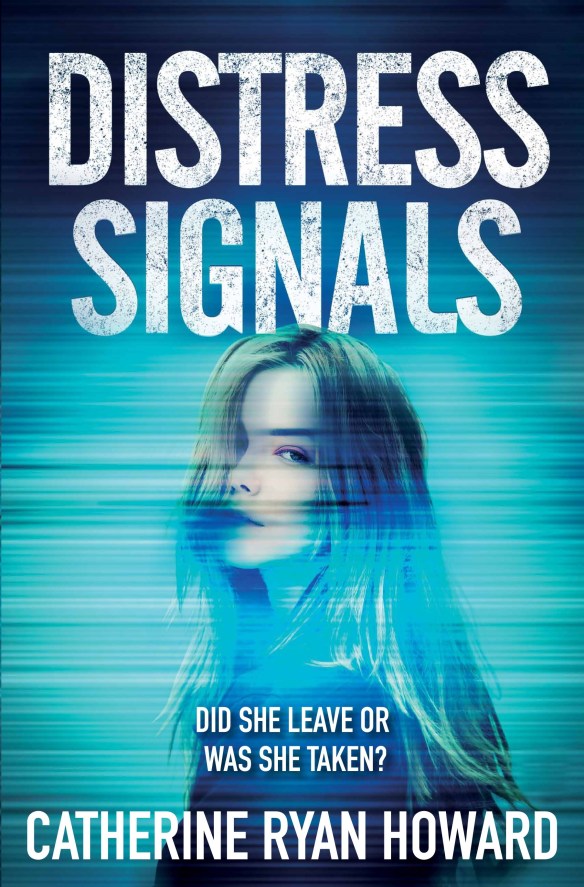
I am very pleased to have Catherine Ryan Howard on my blog today as she celebrates the release of her debut thriller ‘Distress Signals’. Over to you Catherine;

***

Why Didn’t I Self-Publish Distress Signals?

Catherine Ryan Howard

My debut thriller, Distress Signals, was published on May 5 by Corvus/Atlantic, the first in a two-book deal. (The second will be out this time next year.) If you search for my name on Amazon, you’ll find more results than that for my name, because starting in 2010, I self-published. I started with Mousetrapped, the story of the year and a bit I spent living in Orlando, Florida and working in Walt Disney World. I followed it up with Backpacked, the story of what I did after that, i.e. went backpacking around Central America for a couple of months. Finally – since the self-publishing of the first two went well – came the obligatory ‘how to’, Self-Printed: The Sane Person’s Guide to Self-Publishing.

So I have an established platform, I know how to self-publish and it’s gone well for me in the past. So why didn’t I self-publish Distress Signals too.

1. My goal was always to get published

My goal, since I was a child, was to get a novel published. I wrote Mousetrapped, initially, because I felt woefully underprepared for my move to Orlando and thought that the other people who went out there on the same programme I did might benefit from the book. I self-published it because no one was interested in doing the publishing bit for me. Non-fiction felt a low-stakes game for me – it wasn’t the only thing I’d ever wanted to do with my life, so there was significantly less pressure. I wasn’t crippled with fear and anxiety over every last decision. I could have fun with it, because failure wouldn’t be devastating.

I feel totally different about fiction, which is why I wanted an agent to represent it and me and then, hopefully, a publisher to get involved. If Distress Signals had been rejected all over town, my thoughts might have turned to self-publishing it too. But we didn’t get that far.

2. My dream needs a traditional publisher

I’ve held this dream for the best part of three decades and it looks a certain way: a champagne welcome to a publishing house, a beautiful printed book, that book on shelves in bookstores all over the country, interviews and features in newspapers and magazines, a launch party where someone else is footing the bill for the wine. (And all the other bills too…!) Five years or so ago when e-books had an explosive surge in popularity, this dream didn’t suddenly change. I didn’t suddenly decide, after about twenty-five years of wanting a very specific thing, that hey, this other thing will ‘do’ instead. My dream remained the same. And I needed a traditional publisher in order to achieve it.

I understand that if you go to the Kindle store to download your next read, it’s hard to tell if it’s been traditionally or self-published, and it doesn’t seem to matter. But for me, that’s looking at the process very selectively, through an incredibly narrow lens. Over the last year or more, my publisher has done countless things for me that I just could not achieve by myself or, at the very least, wouldn’t have the money, experience or contacts to make happen. Getting e-books on Amazon are just one small part of the publishing process. There’s so much more to it than that, and it’s a ‘more’ I can’t make happen for myself.

3. Team Distress Signals

I loved the challenge of self-publishing and I’m so proud of what I achieved with it, especially because I made it happen by myself. But it can be a lonely road. The buck stops with you. All mistakes are your own.

Right now I have a whole team of people working with me – my agent, my editor, publicists in Ireland and the UK – while numerous other people (designers, sales agents, digital managers) do more heavy lifting behind the scenes. We all have the same goal: to make Distress Signals the best book it can be, and to make its publication as successful as possible. Each person brings years of experience, unique insight and boundless enthusiasm to the table. Because I was paid an advance, these people have invested in me. They’ve taken a risk on me. Now, we’re all working together to make sure that risk pays off.

Yes, control has to be relinquished. Yes, there are frustrating days, or confusing decisions. But so far, I think it’s more than worth it.

* * *

Ultimately, I didn’t self-publish Distress Signals because I didn’t want to and I didn’t have to. That doesn’t mean I’m done with self-publishing though. In fact, I’m certain I’ll return to it again at some point in the future, because I want this to be my career and a career has highs and lows, feasts and famines. Also, traditional publishing runs on contracts, and contracts expire. I have this deal now, yes, but no one knows what’s going to happen in the future.

Even if things go swimmingly, I still think self-publishing should have a place in every author’s master plan. But for now, I’m seeing what the view is like from the other side.

distress signals cover image

ABOUT DISTRESS SIGNALS:

Standalone crime/thriller

Published May 5 by Corvus/Atlantic in Ireland and the UK, June 2 in Australia and New Zealand. Details of North American publication later in 2016 coming soon.

Did she leave, or was she taken?

The day Adam Dunne’s girlfriend, Sarah, fails to return from a Barcelona business trip, his perfect life begins to fall apart. Days later, the arrival of her passport and a note that reads ‘I’m sorry – S’ sets off real alarm bells. He vows to do whatever it takes to find her.

Adam is puzzled when he connects Sarah to a cruise ship called the Celebrate – and to a woman, Estelle, who disappeared from the same ship in eerily similar circumstances almost exactly a year before. To get the answers, Adam must confront some difficult truths about his relationship with Sarah. He must do things of which he never thought himself capable. And he must try to outwit a predator who seems to have found the perfect hunting ground…

Advance praise:

“Pacey, suspenseful and intriguing … [A] top class, page turning read. Catherine Ryan Howard is an astonishing new voice in thriller writing.” — Liz Nugent, author of 2014 IBA Crime Novel of the Year Unravelling Oliver

“An exhilarating debut thriller from a hugely talented author. Distress Signals is fast-paced, twisty and an absolute joy to read.” — Mark Edwards, #1 bestselling author of The Magpies and Follow You Home

Read a preview of the first three chapters here:

https://catherineryanhoward.com/access-your-exclusive-preview/

Amazon.co.uk link:

https://www.amazon.co.uk/Distress-Signals-Incredibly-Gripping-Psychological/dp/1782398384

ABOUT CATHERINE:

Catherine Ryan Howard was born in Cork, Ireland, in 1982. Prior to writing full-time, Catherine worked as a campsite courier in France and a front desk agent in Walt Disney World, Florida, and most recently was a social media marketer for a major publisher. She is currently studying for a BA in English at Trinity College Dublin.

Catherine Ryan Howard by City Headshots Dublin

Catherine Ryan Howard by City Headshots Dublin

http://www.catherineryanhoward.com/

http://www.DistressSignalsBook.com

Twitter: @cathryanhoward

Instagram: @cathryanhoward

Facebook: facebook.com/catherineryanhoward

Guest Post by Alison Williams – 10 things new writers should know

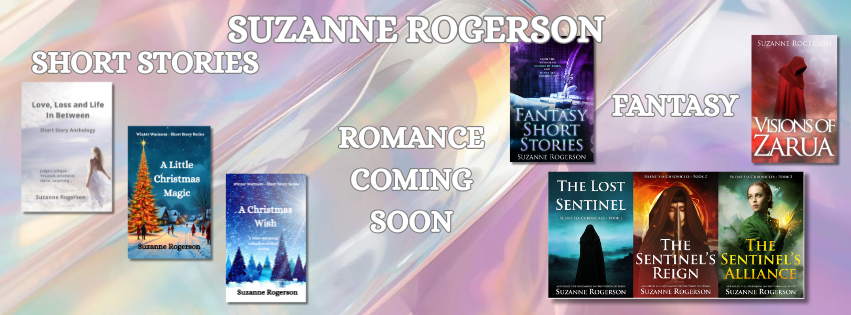
I first came across Alison Williams in 2015 when I was looking for a professional editor to give ‘Visions of Zarua’ a final edit before I self published. I had thought the novel was pretty much ready, but Alison suggested many areas of improvement. In all, I cut 10k off the word count!

She has been a huge help to me through the editing and self publishing stages, and here she offers her advice to all new writers. Thank you, Alison…

~~~~~~~~~~~~~~~~~~~~~~~~

Ten things new writers should know

  1. Writing a book is hard. It’s a long process. It will take up lots and lots of your time. Don’t be fooled into thinking you can write a 50,000 word novel in a month – NaNoWriMo has its uses but what you write in November is certainly not the finished article.
  2. While you might love writing, when you’re supposed to be writing other things will take on a glamour and an appeal you never knew they had. Even ironing.
  3. Social media can be the best thing ever and the worst thing ever. You will make writer friends, find support, help and empathy. You will also waste hours and hours and hours of valuable writing time.
  4. You need a fresh pair of eyes. However good your spelling and grammar, spellcheck and your own eyes aren’t enough. You WILL miss mistakes.
  5. You need an editor. For the reasons above and then some. Not only can spelling mistakes get missed, but so can plot holes, inconsistencies, issues with characterisation, flow, pace – the list could go on and on. And I’m not saying that because I’m an editor. ALL writers need editors.
  6. You need a professional book cover if you’re self-publishing. Too many good books fail to reach an audience because the cover is awful, or bland, or doesn’t relate to the content. See Rosie Amber’s wonderful Friday Five Challenge if you have any doubt about the importance of your cover.
  7. Promoting your book will take as much time, if not more, than writing it. This is the case whether you self publish or are traditionally published. You will need to promote your work, blog about it, tweet, use Google +, Facebook, engage with other writers and readers, maybe do book signings, readings, conferences. Don’t think writing is all about sitting at a laptop creating worlds. You have to interact in the real world too.
  8. Not everyone will love your book. Some people might even hate it. And if they do they may well tell you so. On Amazon. In detail. Grow a thick skin and be prepared. And be prepared to listen to criticism. Your harshest critics might have a point (or they might not, in which case ignore them – never, ever engage with them).
  9. You won’t make lots of money. At least you probably won’t. You’ll work hard, very, very hard for not much monetary reward. Don’t have expectations of paying off the mortgage, buying a new car or even giving up the day job. It might happen. But it probably won’t.
  10. Writing is hard. Did I say that already? It is though. It’s hard, it’s time consuming, it’s frustrating and thankless and sometimes it’s really, really boring. But you should do it anyway. Because when you publish something you’re proud of, and when someone, a complete stranger, writes a five star review for your book on Amazon, it’s a wonderful feeling. And it makes all that hard work worthwhile.


Alison Williams lives in Hampshire with her husband, two teenage children, and a variety of pets including a mad cocker spaniel, a rescue Labrador, a psychotic cat and two of the most unsociable rabbits in existence. She is an independent novelist, freelance editor and writer. As an editor, Alison works mainly with independent authors and has edited everything from erotica, memoirs and poetry to children’s books and fantasy. When she has any time left at all, she enjoys blogging, reading, going to the gym and listening to music (she has an obsession with Johnny Marr), and watching The Sopranos (again). From 2011-2012 she studied for a Masters in Creative Writing with the University of Glasgow. As part of her studies, Alison wrote her first novel ‘The Black Hours’ – available now from Amazon, Smashwords, Barnes and Noble, Sony and the Apple Store. ‘Blackwater’, the prequel to ‘The Black Hours’ is available free as an eBook from all the above outlets. Both can be read as standalones.

Blog: http://alisonwilliamswriting.wordpress.com

Facebook: https://www.facebook.com/alisonwilliamswriting

Twitter: @Alison_WiIliams