
I am very pleased to have Catherine Ryan Howard on my blog today as she celebrates the release of her debut thriller ‘Distress Signals’. Over to you Catherine;
***
Why Didn’t I Self-Publish Distress Signals?
Catherine Ryan Howard
My debut thriller, Distress Signals, was published on May 5 by Corvus/Atlantic, the first in a two-book deal. (The second will be out this time next year.) If you search for my name on Amazon, you’ll find more results than that for my name, because starting in 2010, I self-published. I started with Mousetrapped, the story of the year and a bit I spent living in Orlando, Florida and working in Walt Disney World. I followed it up with Backpacked, the story of what I did after that, i.e. went backpacking around Central America for a couple of months. Finally – since the self-publishing of the first two went well – came the obligatory ‘how to’, Self-Printed: The Sane Person’s Guide to Self-Publishing.
So I have an established platform, I know how to self-publish and it’s gone well for me in the past. So why didn’t I self-publish Distress Signals too.
1. My goal was always to get published
My goal, since I was a child, was to get a novel published. I wrote Mousetrapped, initially, because I felt woefully underprepared for my move to Orlando and thought that the other people who went out there on the same programme I did might benefit from the book. I self-published it because no one was interested in doing the publishing bit for me. Non-fiction felt a low-stakes game for me – it wasn’t the only thing I’d ever wanted to do with my life, so there was significantly less pressure. I wasn’t crippled with fear and anxiety over every last decision. I could have fun with it, because failure wouldn’t be devastating.
I feel totally different about fiction, which is why I wanted an agent to represent it and me and then, hopefully, a publisher to get involved. If Distress Signals had been rejected all over town, my thoughts might have turned to self-publishing it too. But we didn’t get that far.
2. My dream needs a traditional publisher
I’ve held this dream for the best part of three decades and it looks a certain way: a champagne welcome to a publishing house, a beautiful printed book, that book on shelves in bookstores all over the country, interviews and features in newspapers and magazines, a launch party where someone else is footing the bill for the wine. (And all the other bills too…!) Five years or so ago when e-books had an explosive surge in popularity, this dream didn’t suddenly change. I didn’t suddenly decide, after about twenty-five years of wanting a very specific thing, that hey, this other thing will ‘do’ instead. My dream remained the same. And I needed a traditional publisher in order to achieve it.
I understand that if you go to the Kindle store to download your next read, it’s hard to tell if it’s been traditionally or self-published, and it doesn’t seem to matter. But for me, that’s looking at the process very selectively, through an incredibly narrow lens. Over the last year or more, my publisher has done countless things for me that I just could not achieve by myself or, at the very least, wouldn’t have the money, experience or contacts to make happen. Getting e-books on Amazon are just one small part of the publishing process. There’s so much more to it than that, and it’s a ‘more’ I can’t make happen for myself.
3. Team Distress Signals
I loved the challenge of self-publishing and I’m so proud of what I achieved with it, especially because I made it happen by myself. But it can be a lonely road. The buck stops with you. All mistakes are your own.
Right now I have a whole team of people working with me – my agent, my editor, publicists in Ireland and the UK – while numerous other people (designers, sales agents, digital managers) do more heavy lifting behind the scenes. We all have the same goal: to make Distress Signals the best book it can be, and to make its publication as successful as possible. Each person brings years of experience, unique insight and boundless enthusiasm to the table. Because I was paid an advance, these people have invested in me. They’ve taken a risk on me. Now, we’re all working together to make sure that risk pays off.
Yes, control has to be relinquished. Yes, there are frustrating days, or confusing decisions. But so far, I think it’s more than worth it.
* * *
Ultimately, I didn’t self-publish Distress Signals because I didn’t want to and I didn’t have to. That doesn’t mean I’m done with self-publishing though. In fact, I’m certain I’ll return to it again at some point in the future, because I want this to be my career and a career has highs and lows, feasts and famines. Also, traditional publishing runs on contracts, and contracts expire. I have this deal now, yes, but no one knows what’s going to happen in the future.
Even if things go swimmingly, I still think self-publishing should have a place in every author’s master plan. But for now, I’m seeing what the view is like from the other side.
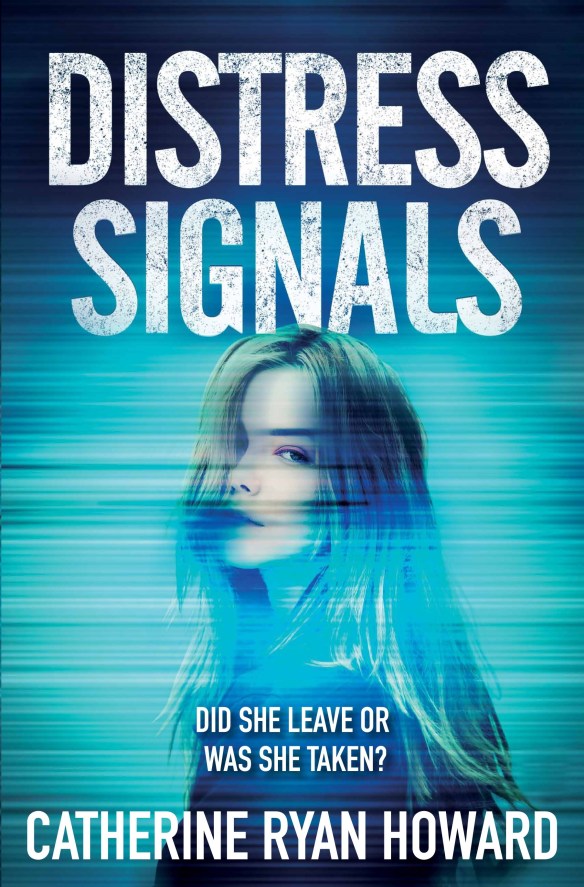
ABOUT DISTRESS SIGNALS:
Standalone crime/thriller
Published May 5 by Corvus/Atlantic in Ireland and the UK, June 2 in Australia and New Zealand. Details of North American publication later in 2016 coming soon.
Did she leave, or was she taken?
The day Adam Dunne’s girlfriend, Sarah, fails to return from a Barcelona business trip, his perfect life begins to fall apart. Days later, the arrival of her passport and a note that reads ‘I’m sorry – S’ sets off real alarm bells. He vows to do whatever it takes to find her.
Adam is puzzled when he connects Sarah to a cruise ship called the Celebrate – and to a woman, Estelle, who disappeared from the same ship in eerily similar circumstances almost exactly a year before. To get the answers, Adam must confront some difficult truths about his relationship with Sarah. He must do things of which he never thought himself capable. And he must try to outwit a predator who seems to have found the perfect hunting ground…
Advance praise:
“Pacey, suspenseful and intriguing … [A] top class, page turning read. Catherine Ryan Howard is an astonishing new voice in thriller writing.” — Liz Nugent, author of 2014 IBA Crime Novel of the Year Unravelling Oliver
“An exhilarating debut thriller from a hugely talented author. Distress Signals is fast-paced, twisty and an absolute joy to read.” — Mark Edwards, #1 bestselling author of The Magpies and Follow You Home
Read a preview of the first three chapters here:
https://catherineryanhoward.com/access-your-exclusive-preview/
Amazon.co.uk link:
https://www.amazon.co.uk/Distress-Signals-Incredibly-Gripping-Psychological/dp/1782398384
ABOUT CATHERINE:
Catherine Ryan Howard was born in Cork, Ireland, in 1982. Prior to writing full-time, Catherine worked as a campsite courier in France and a front desk agent in Walt Disney World, Florida, and most recently was a social media marketer for a major publisher. She is currently studying for a BA in English at Trinity College Dublin.

Catherine Ryan Howard by City Headshots Dublin
http://www.catherineryanhoward.com/
http://www.DistressSignalsBook.com
Twitter: @cathryanhoward
Instagram: @cathryanhoward
Facebook: facebook.com/catherineryanhoward
 Suzanne Rogerson Fantasy Author